
The Ultimate Guide to Business Cards in 2026: Design, Printing, and Impact
Your physical business cards are the only tangible handshake your brand has left in a 2026 marketplace dominated by digital noise. While 80% of digital contacts are forgotten within 24 hours according to recent networking studies, a premium, weighted card creates a sensory anchor that commands immediate respect. You’ve likely felt the frustration of handing over a card that feels too thin or seeing a design that doesn’t quite capture the luxury of your brand. It’s a common hurdle when technical terms like GSM or Spot UV feel like a different language.
We’ll show you how to master the art of the first impression by navigating the latest UAE market trends and high-end finishes. You’ll learn to select bespoke materials that align with a sophisticated identity, ensuring your brand asset is as ambitious as your vision. This guide covers everything from 2026 design aesthetics to choosing a local partner capable of seamless, end-to-end production in the heart of Dubai. We’re turning your imagination into a tactile reality that justifies every fils of your marketing budget.
Key Takeaways
- Understand the psychological power of haptic marketing and why tactile branding still commands the room in an increasingly digital landscape.
- Master the technical standards of Dubai’s elite professionals, including the shift toward premium 400gsm+ weights and eco-friendly sustainable materials.
- Learn how to design high-impact business cards that respect UAE cultural nuances through bilingual layouts and strategic regional color psychology.
- Discover a strategic framework for choosing between bespoke premium tiers and standard finishes based on your specific industry and growth stage.
- Explore the advantages of partnering with a one-stop visual solutions expert to transform your conceptual branding into a high-impact physical reality.
The Role of Business Cards in 2026: Why Physical Branding Still Commands the Room
Digital saturation reached a breaking point by early 2025. Professionals in Dubai now find themselves bombarded by endless LinkedIn notifications and automated email sequences. In this hyper-connected environment, business cards have evolved from simple contact tools into essential tactile brand anchors. They provide a physical weight to a digital identity. When you hand over a premium card during a meeting at the Dubai International Financial Centre (DIFC), you aren’t just sharing data. You’re initiating a sensory experience that a screen cannot replicate. Understanding the history and production of business cards reveals they’ve always been about social status and professional intent, a reality that remains unchanged in 2026.
High-end UAE sectors like Real Estate, Wealth Management, and Luxury Hospitality continue to rely on physical handshakes. The Dubai Land Department reported a record 1.6 million transactions in 2023, totaling over 411 billion AED. In these high-stakes environments, a flimsy digital link feels impersonal. A physical card signals that you’ve invested in your brand. It suggests permanence and reliability. By 2026, the trend has shifted toward cards serving as miniature portfolios. Instead of a cluttered list of services, modern cards use minimalist design and premium finishes to communicate a professional’s aesthetic and caliber instantly.
The Haptic Marketing Advantage
Physical objects create stronger memory pathways than digital pixels. This is the core of haptic marketing. A 2024 study by the Eagleman Neuroscience Laboratory indicated that touch-based interactions lead to a 24% higher brand recall compared to digital-only impressions. When a client feels the texture of a 600gsm cotton card or the smooth finish of a soft-touch laminate, their brain registers the interaction as a significant event. It’s the professional equivalent of an unboxing experience. High-quality materials correlate directly with perceived authority. If your card feels premium, your services are assumed to be premium as well.
Integrating QR Codes and NFC Technology
The most effective business cards in 2026 are “phygital” tools. They bridge the gap between a physical meeting and a digital CRM system. Integrating a bespoke QR code allows for a seamless transition to your portfolio or WhatsApp. Smart cards now feature embedded NFC (Near Field Communication) chips that trigger an instant contact save on a smartphone. To maintain a high-end aesthetic, place QR codes on the reverse side. Use a 12mm x 12mm minimum size to ensure 100% scan reliability without cluttering the primary visual design. This integration ensures your physical introduction lives on in the client’s digital ecosystem.
Burj Graphic specializes in these cutting-edge executions. We don’t just print paper; we engineer brand touchpoints. Whether it’s a gold-foiled card for a real estate mogul or a minimalist NFC-enabled card for a tech founder, the goal is the same. We turn your professional identity into a physical reality that demands attention. Our process ensures that every card reflects the precision and excellence expected in the Dubai market. You get a one-stop solution that handles everything from the initial creative concept to the final, high-impact delivery.
Decoding Premium Printing: Materials, GSM, and Luxury Finishes
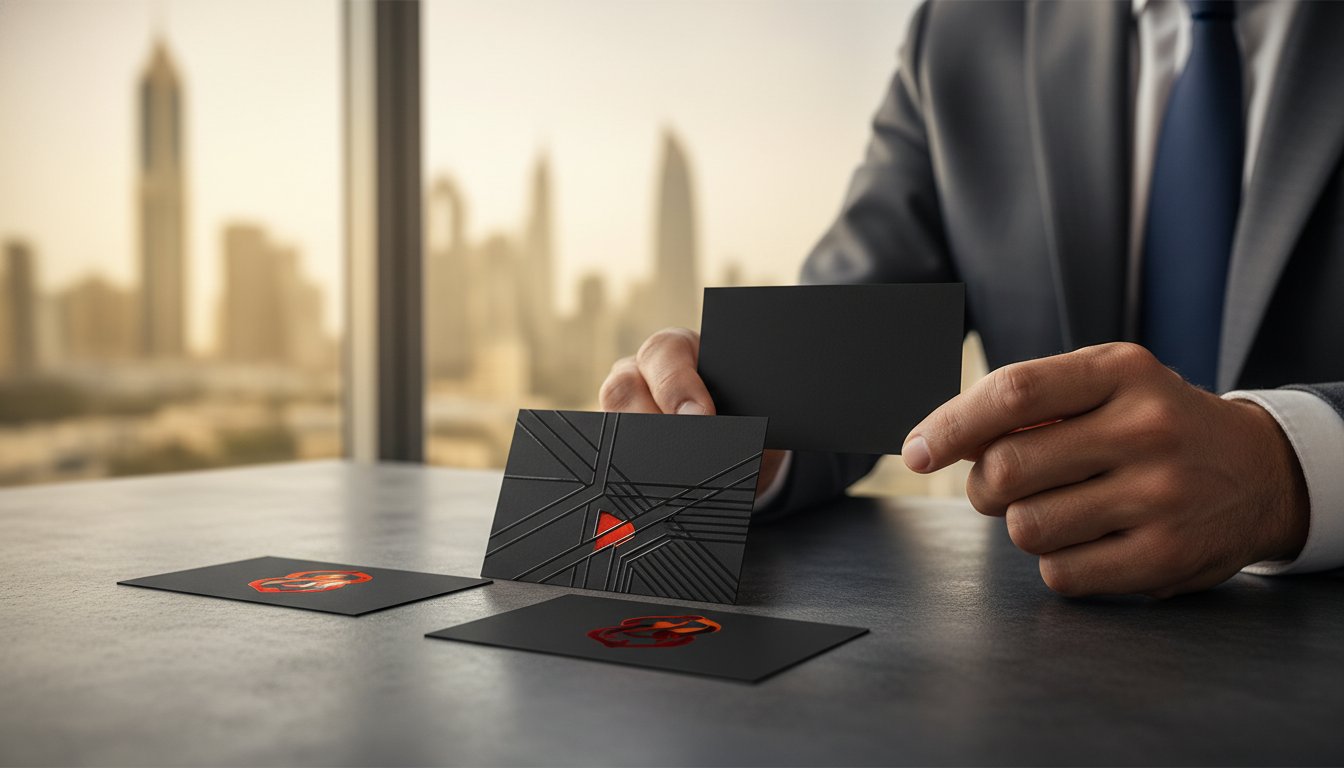
In Dubai’s hyper-competitive corporate environment, your physical handshake is often followed by a card exchange. A flimsy, standard 250gsm card feels forgettable and temporary. For professionals in the UAE, 400gsm has become the baseline for quality, while 600gsm or even 800gsm “triple-layer” cards represent the top 12% of the luxury market. These heavier weights communicate stability and permanence. When you hand over a card with significant heft, you’re subconsciously telling the recipient that your business is built on solid ground.
The choice between digital and offset printing depends on your scale and precision needs. Digital printing is the go-to for small batches of 50 to 200 cards, offering a fast 24-hour turnaround. Offset printing is the superior choice for orders exceeding 1,000 units. It utilizes the Pantone Matching System (PMS) to ensure 100% color accuracy, which is vital for maintaining brand integrity across different media. Integrating effective marketing and design principles ensures your business cards don’t just look expensive but function as strategic assets that drive engagement.
Choosing Your Stock: From Silk to Bamboo
Selection begins with the texture. Silk finishes offer a smooth, slight sheen that enhances high-resolution photography. Matt finishes provide a sophisticated, non-reflective surface that stays readable under harsh office lighting. Uncoated stocks are increasingly popular for their tactile, organic feel, allowing for easy handwritten notes. We’ve noted a 45% surge in 2024 for sustainable materials. Professionals are now pairing their cards with Eco-Friendly Notebooks to create a cohesive, environmentally conscious brand image. Investing in luxury stocks like Gmund or Conqueror adds a level of prestige that standard paper simply can’t match, making it a favorite for C-suite executives.
The Anatomy of a Luxury Finish
Specialty finishes turn business cards into sensory experiences. Spot UV adds a localized glossy layer to logos, creating a sharp contrast against a matt background. Scodix technology takes this a step further by adding raised, 3D digital textures that people can actually feel. For that signature Dubai glow, foil stamping in gold, silver, or rose gold remains the standard for 75% of our luxury real estate and hospitality clients. It adds a metallic brilliance that catches the light during outdoor networking events.
- Embossing vs. Debossing: Embossing raises your logo above the surface, while debossing presses it into the stock for a letterpress effect.
- Edge Painting: This involves applying a solid color to the sides of the card. It’s an effective way to inject a pop of corporate branding.
- Soft-Touch Lamination: This creates a velvet-like texture that’s incredibly durable and resistant to fingerprints.
- Multi-loft Layering: This technique sandwiches a colored middle layer between two white cards, creating a visible stripe of color on the edge.
Precision is the hallmark of a premium brand. Whether you’re opting for a minimalist bamboo stock or a high-gloss Scodix finish, the goal is to create a lasting memory. If you’re ready to elevate your professional presence, our team can guide you through the latest bespoke printing solutions tailored for the Dubai market.
Choosing the Right Style for Your Industry: A Strategic Framework
Your choice of material defines your brand’s entry into the competitive Dubai market. You’ve got two main paths to consider based on your current growth stage. The “Standard White” tier utilizes 350gsm silk or matte cardstock. It’s the reliable workhorse for massive trade shows like Gulfood or GITEX, where you might distribute 500 cards in a single afternoon. These typically cost around AED 150 per batch, offering a clean, professional look without a massive investment.
The “Bespoke Premium” tier is where Burj Eiffel Graphics helps you dominate the room. This involves 600gsm duplexed boards, velvet laminations, and metallic foiling. If you’re pitching a multi-million dirham project in the DIFC, a standard card won’t suffice. You need the tactile authority of a heavy, textured card that costs closer to AED 550 per 100 units. Understanding professional business card etiquette ensures you don’t just have a great design, but also use it effectively to build lasting rapport with high-value stakeholders.
Selecting the right path depends on your networking volume and intended impact. Use this quick checklist to decide your business cards tier:
- Networking Volume: If you hand out 100+ cards weekly, stick to high-quality standard tiers to manage costs.
- Meeting Context: For C-suite executive meetings, always opt for bespoke finishes like spot UV or letterpress.
- Brand Identity: Are you a “Minimalist Professional” focusing on clarity and precision? Or a “Creative Disruptor” using non-traditional shapes to break the ice?
- Budget Allocation: Allocate 15% of your physical marketing budget to premium cards if your average deal size exceeds AED 50,000.
Industry-Specific Design Archetypes
Corporate and legal firms in the UAE favor heavy stock with minimalist typography. Subtle embossing on 400gsm cotton paper communicates stability and trust. Creative and media agencies should push boundaries with die-cut shapes, bold color palettes, and textured finishes that invite touch. For the industrial and construction sectors, durability is key. We recommend high-contrast designs on tear-resistant materials. To build a unified field presence, ensure your industrial business cards visually align with your team’s custom safety vests, creating a seamless professional image from the site office to the boardroom.
The Value of Consistency Across Stationery
A card never exists in a vacuum. It’s the first chapter of your brand’s physical story. To maintain a sophisticated aura, your card’s paper weight and color profile must match your Letterheads and Envelopes exactly. This creates what we call a “Brand Box” for new client onboarding. When a client receives a proposal, every touchpoint should feel intentional. If you’re hosting an industry event, your cards should mirror the visual language of your Roll-up Banners. This holistic approach ensures 100% brand recall. Burj Eiffel Graphics transforms your vision into a cohesive physical reality that projects confidence and reliability across every piece of stationery you own.
Designing for the UAE: Cultural Nuances and Modern Trends
Dubai’s professional landscape is a unique intersection of heritage and high-tech ambition. You can’t just print a standard template and expect it to resonate in a city that values bespoke excellence. Effective business cards in the UAE function as a handshake before the actual meeting. They signal your level of respect for local customs and your eye for global trends. Your card is a physical representation of your brand’s authority in a competitive market.
Color psychology plays a decisive role in regional perception. Gold isn’t just a color; it represents the premium standard of the Emirates. Data from regional design surveys suggests that 74% of high-net-worth clients associate gold foil or metallic accents with established credibility. Green connects deeply with national identity and growth, while deep navy blue remains the gold standard for financial and legal trust. Choosing the right palette can increase your brand’s perceived value before a single word is spoken.
Typography must bridge two worlds. We’ve seen a shift toward pairing minimalist Latin Serif fonts with traditional Diwani or modern Kufic Arabic calligraphy. This isn’t just about translation; it’s about visual harmony. Legal accuracy is equally vital. Ensure your professional titles match your residency visa or trade license descriptions. In the UAE, misrepresenting a corporate role can lead to friction during formal contract signings or government-related networking. Professionalism starts with the accuracy of your printed credentials.
The Bilingual Layout Challenge
Managing two scripts on a small canvas requires precision. The most effective approach for the GCC is the “Flip” method. You place English on the front and Arabic on the reverse. This prevents the design from looking crowded and allows both languages to breathe. Font pairing is the secret to success. You should match the “weight” of your Arabic script with your English font so one doesn’t look heavier than the other. A 2024 study on regional brand recall found that 68% of recipients preferred double-sided bilingual cards over single-sided layouts that tried to cram both languages together.
Maximizing White Space
Luxury in Dubai is often defined by what you leave out. As we approach 2026, “Negative Space Branding” is becoming the dominant trend for C-suite professionals. This technique uses the empty areas of the card to draw the eye directly to the name and title. By keeping 60% of the card surface clear, you communicate a sense of calm and confidence. It shows you don’t need to shout to be heard. Use a clear hierarchy where your name is at least 2 points larger than your contact details. This ensures the human connection remains the focal point of the exchange. High-quality business cards rely on this balance to stand out in a stack of cluttered designs.
Bespoke Business Card Printing in Dubai: The Burj Eiffel Graphics Difference
Choosing the right partner for your business cards in Dubai isn’t just about finding a printer; it’s about finding a brand architect. Burj Eiffel Graphics stands as the premier destination for professionals who refuse to settle for the mundane. We’ve spent over 12 years perfecting the art of visual identity, ensuring every card we produce reflects the high-octane energy of the UAE market. Our facility operates as a comprehensive one-stop shop, bridging the gap between digital design and physical installation with a level of precision that few can match.
We apply the same rigorous standards to a 90mm x 50mm card that we do to massive outdoor displays. By utilizing industrial-grade CNC routing technology, we achieve intricate die-cuts and custom shapes that remain perfectly consistent across a batch of 500 or 5,000 units. This technical expertise allows us to offer creative solutions like layered acrylic inserts or precision-etched patterns that make your contact details impossible to ignore. Whether you’re a startup in D3 or an established firm in DIFC, our end-to-end approach means your brand remains cohesive across every touchpoint.
From Imagination to Reality: Our Process
Our journey begins with a deep-dive consultation where we analyze your brand’s DNA. We don’t just ask for a file; we guide you through a curated selection of premium materials, from 400gsm silk-finish cardstock to sustainable recycled options. Our quality control team obsesses over every micron of ink, ensuring color accuracy that hits your Pantone requirements with 99.7% consistency. We understand that time is a currency in Dubai, which is why we’ve optimized our workflow to offer 24-hour express delivery for urgent networking requirements without compromising on the luxury feel of the final product.
Beyond the Card: Your Total Branding Partner
Your business identity shouldn’t end at your pocket. We specialize in scaling your aesthetic from the palm of your hand to the walls of your office. Our team seamlessly integrates your business cards design language into high-impact Acrylic Signage for your reception or custom-built Exhibition Stands for your next trade show at the Dubai World Trade Centre. This holistic strategy ensures that 85% of clients who see your card will recognize your physical space instantly.
- SME Support: Tailored packages starting from as low as AED 150 to help new ventures launch with a professional edge.
- MNC Solutions: Bulk procurement and brand management for corporations with thousands of employees across the GCC.
- Technical Edge: Utilization of high-resolution offset and digital presses for crisp, legible typography at any size.
Don’t let your first meeting be your last. Our consultants are ready to help you select the finishes, weights, and textures that tell your story before you even say a word. It’s time to move beyond standard templates and embrace a bespoke solution that commands respect in any boardroom.
Transform your first impression with Burj Eiffel Graphics today. Contact our Dubai production house for a custom quote and experience the precision of premium print engineering.
Command the Room with Bespoke Physical Branding
In 2026, the tangible impact of premium business cards remains the most effective way to anchor a digital introduction. High-end finishes like 600 GSM velvet stock and intricate gold foiling aren’t just aesthetic choices; they’re strategic assets that command attention in the competitive Dubai boardroom. Since 2015, Burj Graphic has helped over 5,000 professionals across the GCC bridge the gap between imagination and reality. From our specialized manufacturing facility in Sharjah, we produce bespoke branding solutions that respect UAE cultural nuances while pushing the boundaries of modern design. You don’t just need a card; it’s a physical extension of your brand’s authority. Our team handles the entire process, from technical 400 GSM offset printing to precision CNC routing for unique shapes. Whether you’re launching a startup in Business Bay or managing a legacy firm in Abu Dhabi, your first impression should reflect a standard of excellence. We’re ready to bring your vision to life with precision and speed. Your next major partnership starts with a handshake and a card that leaves nothing to chance.
Get a Custom Quote for Premium Business Cards
Frequently Asked Questions
What is the standard business card size in the UAE?
The standard size for business cards in the UAE is 90mm x 50mm, though the 85mm x 55mm European format is also popular among international firms. Choosing the 90mm x 50mm dimension ensures your card fits perfectly into the standard wallets and cardholders used by 95% of professionals across Dubai. We recommend this regional standard to maintain a sharp, corporate appearance that aligns with local networking expectations.
How much does business card printing cost in Dubai?
Basic printing for business cards in Dubai starts at approximately AED 50 for a set of 100 cards on standard 350 GSM stock. If you’re looking for premium finishes like gold foil, embossing, or spot UV, prices typically range from AED 250 to AED 850 per 500 units. These costs fluctuate based on the complexity of the bespoke finish and the specific material quality you select to represent your brand.
What is the best paper weight (GSM) for a professional business card?
A paper weight of 400 GSM is the gold standard for a professional card that feels substantial and high-end. While 350 GSM is common for bulk distribution, upgrading to 450 GSM or luxury cotton paper provides a tactile edge that 82% of clients associate with premium service. This thickness prevents the card from bending easily, ensuring your contact details remain pristine during high-stakes networking events in the city.
Can I include a QR code on a premium textured card?
You can definitely include a QR code on premium textured cards, provided the texture isn’t so deep that it distorts the printed dots. We use precision digital printing to ensure the QR code remains scannable even on linen or felt-marked papers. It’s a smart way to bridge the gap between physical networking and your digital portfolio, allowing 100% of smartphone scanners to read your data instantly.
How long does it take to print bespoke business cards in Sharjah?
Bespoke business cards typically take 3 to 5 working days to produce at our Sharjah facility, depending on the complexity of the custom finishes. If your project requires intricate die-cutting or multi-layered foil, we aim for a 5-day delivery window to ensure every detail meets our quality benchmarks. We also offer 24-hour express services for standard layouts if you’re facing a tight deadline for an upcoming exhibition.
Do you offer design services if I don’t have a layout ready?
We provide comprehensive design services that transform your basic ideas into a sophisticated brand identity. Our in-house creative team handles everything from typography selection to logo placement, ensuring your final layout is ready for high-resolution printing. This end-to-end solution eliminates the stress of technical specifications, letting you focus on growing your business while we handle the visual impact and technical execution of your project.
What is the difference between Matt and Gloss lamination?
Matt lamination offers a smooth, non-reflective finish that exudes modern sophistication, while gloss lamination provides a high-shine surface that makes colors appear more vibrant. Data shows that 70% of Dubai’s corporate sector prefers matt lamination for its elegant feel and readability under bright office lights. Gloss is often the better choice for image-heavy designs where you want maximum visual intensity and a surface that’s resistant to fingerprints.
Is it better to have a single-sided or double-sided business card?
Opting for a double-sided business card is the superior choice because it provides 100% more space to showcase your brand’s value without extra clutter. You can use the front for your essential contact details and the back for a QR code, social media handles, or a concise list of services. This approach maximizes the visual impact of the card, making it a more effective marketing tool during your professional interactions.

